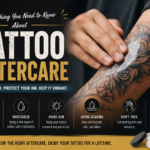
Getting a new tattoo is exciting, but proper aftercare is what keeps your ink looking sharp, vibrant, and infection-free. Whether it’s your first tattoo or your tenth, understanding the healing process can make a huge difference in the final result.
In this complete tattoo aftercare guide, you’ll learn exactly how to care for a new tattoo, what products to use, what mistakes to avoid, and how long healing usually takes.
Why Tattoo Aftercare Matters
A fresh tattoo is essentially an open wound. Your skin has been punctured thousands of times, making it vulnerable to bacteria, irritation, and damage. Without proper care, you risk:
- Infection
- Fading ink
- Scarring
- Uneven healing
- Skin irritation
Good aftercare helps preserve color, improve healing, and protect your investment for years to come.
Tattoo Healing Stages
Understanding the healing timeline helps you know what’s normal and when to seek help.
Stage 1: Fresh Tattoo (Days 1–3)
Right after getting tattooed, your skin may feel:
- Red
- Swollen
- Sensitive
- Warm to the touch
Some clear fluid or ink leakage is completely normal during this stage.
What to Do
- Keep the bandage on for the time recommended by your tattoo artist
- Wash your hands before touching the tattoo
- Gently clean with lukewarm water and fragrance-free soap
- Pat dry with a clean paper towel
Stage 2: Peeling and Itching (Days 4–14)
Your tattoo may begin to:
- Flake
- Peel
- Feel itchy
- Look dull temporarily
This stage is similar to a mild sunburn peeling.
Important:
Never scratch or pick at peeling skin. Doing so can remove ink and cause patchy healing.
Stage 3: Final Healing (Weeks 2–6)
The outer layer of skin may look healed, but deeper layers are still repairing themselves.
Continue moisturizing and protecting your tattoo from sun exposure during this phase.
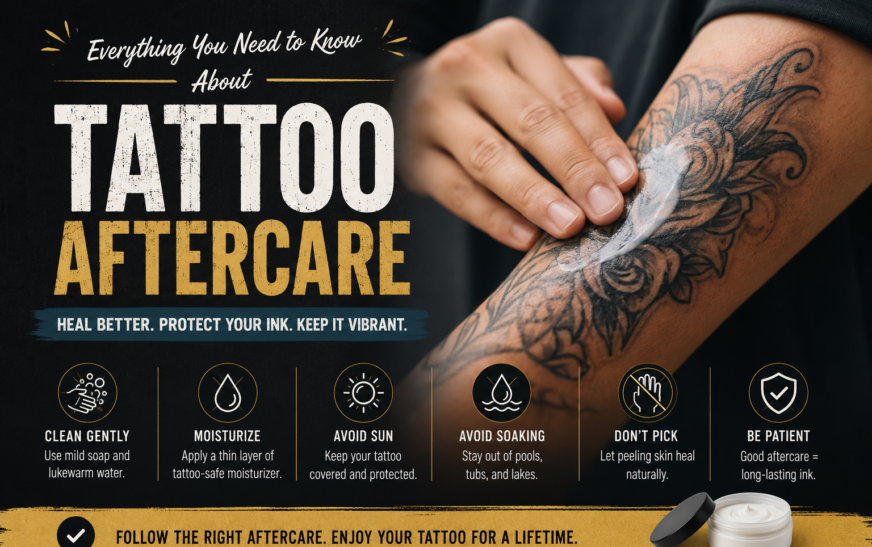
Step-by-Step Tattoo Aftercare Routine
1. Remove the Bandage Properly
Follow your tattoo artist’s instructions carefully. Most artists recommend removing the wrap after a few hours, while some medical-grade bandages stay on longer.
Avoid ripping it off quickly. Use lukewarm water if needed to loosen adhesive safely.
2. Wash the Tattoo Gently
Clean your tattoo 2–3 times daily using:
- Mild fragrance-free soap
- Lukewarm water
- Clean hands only
Avoid:
- Washcloths
- Sponges
- Harsh scrubbing
Pat dry instead of rubbing.
3. Apply a Thin Layer of Moisturizer
Use tattoo-safe ointments or fragrance-free moisturizers.
Popular choices include:
- Aquaphor
- Unscented lotion
- Specialized tattoo aftercare creams
Apply a thin layer only. Too much moisture can clog pores and slow healing.
4. Avoid Sun Exposure
Fresh tattoos are highly sensitive to UV rays. Sun exposure can cause:
- Fading
- Blurry lines
- Skin damage
Keep your tattoo covered outdoors during healing.
After healing, always use sunscreen with SPF 30 or higher.
5. Stay Away from Water Activities
Avoid:
- Swimming pools
- Hot tubs
- Lakes
- Long baths
Soaking your tattoo can introduce bacteria and damage healing skin.
Short showers are perfectly fine.
What NOT to Do After Getting a Tattoo
Many tattoo problems come from common aftercare mistakes.
Don’t Scratch or Pick
Peeling skin and scabs are part of healing. Picking can pull ink from the skin and create scars.
Don’t Over-Moisturize
Too much ointment prevents airflow and may lead to breakouts or delayed healing.
Don’t Wear Tight Clothing
Tight fabrics can rub against the tattoo, causing irritation and sticking to healing skin.
Choose loose, breathable clothing whenever possible.
Don’t Exercise Excessively Right Away
Heavy sweating and friction may irritate fresh tattoos, especially large pieces.
Avoid intense workouts for the first few days if possible.
Signs of an Infected Tattoo
Some redness and irritation are normal, but certain symptoms may indicate infection.
Watch for:
- Severe swelling
- Yellow or green pus
- Fever
- Excessive pain
- Bad odor
- Red streaks spreading from the tattoo
If these symptoms appear, contact a healthcare professional immediately.
Best Products for Tattoo Aftercare
Choosing the right products can speed up healing and protect your tattoo quality.
Recommended Ingredients
Look for:
- Fragrance-free formulas
- Gentle moisturizers
- Antibacterial properties
- Non-comedogenic products
Avoid Products With
- Heavy fragrances
- Alcohol
- Harsh chemicals
- Petroleum overload
How Long Does a Tattoo Take to Heal?
Most tattoos heal on the surface within 2–3 weeks, but complete healing underneath the skin can take up to 6 weeks or longer.
Healing time depends on:
- Tattoo size
- Placement
- Skin type
- Overall health
- Aftercare routine
Long-Term Tattoo Care Tips
Once your tattoo heals, ongoing care keeps it vibrant.
Use Sunscreen Daily
UV rays are the number one cause of tattoo fading.
Keep Skin Hydrated
Healthy skin helps tattoos maintain sharp detail and bright color.
Avoid Rapid Weight Changes
Major skin stretching can distort tattoo appearance over time.
FAQs About Tattoo Aftercare
Can I shower after getting a tattoo?
Yes, short showers are safe. Avoid soaking the tattoo or exposing it to high-pressure water.
Is itching normal during tattoo healing?
Yes, mild itching is completely normal. Avoid scratching to prevent damage.
When can I work out again?
Light activity is usually fine after a couple of days, but avoid excessive sweating or friction on the tattooed area.
Should I let my tattoo dry out?
No. Tattoos heal best with balanced moisture, not excessive dryness or heavy ointment.
Final Thoughts
Tattoo aftercare is essential for protecting your skin and preserving your artwork. Following a proper healing routine helps prevent infection, reduces fading, and ensures your tattoo looks its best for years to come.
By cleaning gently, moisturizing correctly, avoiding sun exposure, and staying patient during the healing process, you’ll give your tattoo the best chance to heal beautifully.
If you ever notice unusual symptoms or signs of infection, don’t ignore them. Proper care today can protect your tattoo for a lifetime.
For More Information Visit Our Homepage: