
Back pain can make even simple daily movements feel difficult. Whether you sit at a desk all day, lift weights regularly, or just want better posture, strengthening your back muscles is one of the most effective ways to protect your spine and improve overall mobility.
In fact, research shows that lower back pain affects hundreds of millions of people worldwide — and the numbers continue to rise. The good news? A well-structured back workout routine can help reduce discomfort, improve posture, increase flexibility, and build total-body strength.
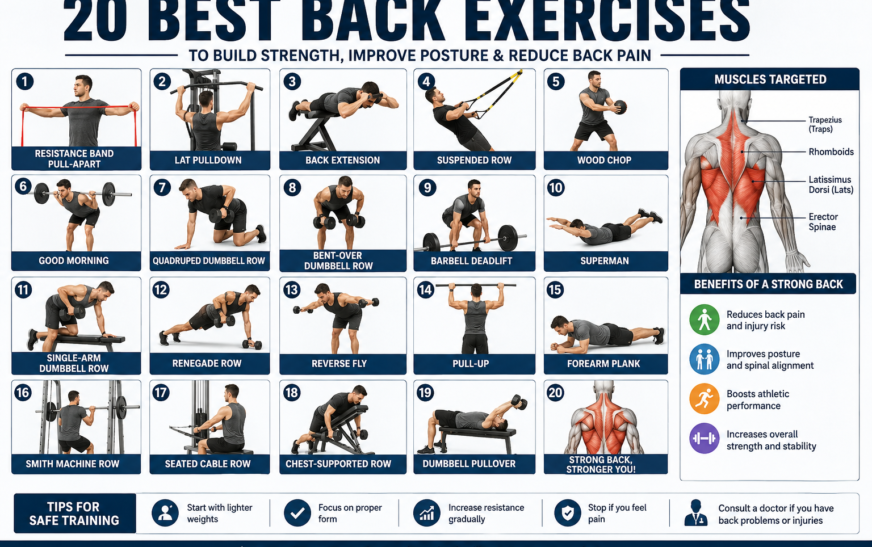
This guide covers the best back exercises for beginners and advanced fitness levels, including step-by-step instructions, benefits, and tips for proper form.
Why Back Strength Matters
Your back muscles support nearly every movement your body makes. A strong back helps:
- Reduce the risk of lower back pain
- Improve posture and spinal alignment
- Increase athletic performance
- Support shoulder and core stability
- Enhance lifting strength
- Improve mobility and balance
Weak back muscles often contribute to poor posture, muscle imbalances, and chronic discomfort.
Main Back Muscles These Exercises Target
Before starting, it helps to understand the major muscles involved:
Table of Contents
ToggleLatissimus Dorsi (Lats)
Large muscles along the sides of your back that help with pulling movements.
Rhomboids
Located between the shoulder blades and responsible for retracting the shoulders.
Trapezius (Traps)
Extend from your neck to mid-back and support posture and shoulder movement.
Erector Spinae
Run alongside the spine and help stabilize and extend your back.
Warm-Up Before Your Back Workout
Never skip your warm-up. Start with:
- 5–10 minutes of light cardio
- Dynamic shoulder rolls
- Arm circles
- Cat-cow stretches
- Hip hinges
- Torso twists
A proper warm-up improves blood flow and reduces injury risk.
1. Resistance Band Pull-Apart
Why It Works
This simple movement activates your upper back and improves shoulder stability.
Muscles Targeted
- Rhomboids
- Rear deltoids
- Trapezius
How to Do It
- Hold a resistance band at shoulder height.
- Keep your arms straight.
- Pull the band apart until it touches your chest.
- Squeeze your shoulder blades together.
- Return slowly.
Recommended Sets
- 2–3 sets of 12–15 reps
2. Lat Pulldown
Why It Works
One of the best exercises for building width and upper-body pulling strength.
Muscles Targeted
- Latissimus dorsi
- Rhomboids
- Biceps
- Traps
How to Do It
- Sit at a lat pulldown machine.
- Grip the bar wider than shoulder-width.
- Pull the bar toward your upper chest.
- Keep your torso upright.
- Slowly return.
Recommended Sets
- 3 sets of 8–12 reps
3. Back Extension
Why It Works
Strengthens your lower back and posterior chain.
Muscles Targeted
- Erector spinae
- Glutes
- Hamstrings
How to Do It
- Lie face down on a stability ball or back extension bench.
- Lower your torso.
- Raise your upper body until aligned.
- Pause briefly at the top.
Recommended Sets
- 2–3 sets of 10–12 reps
4. Suspended Row
Why It Works
Uses body weight to improve upper back strength and stability.
Muscles Targeted
- Lats
- Rhomboids
- Traps
- Core
How to Do It
- Grab suspension trainer handles.
- Lean backward with arms extended.
- Pull your chest toward the handles.
- Lower slowly.
Recommended Sets
- 3 sets of 8–12 reps
5. Wood Chop
Why It Works
Improves rotational strength while engaging the core and upper back.
Muscles Targeted
- Obliques
- Core
- Shoulders
- Upper back
How to Do It
- Hold a dumbbell or medicine ball overhead.
- Rotate your torso diagonally downward.
- Return to the starting position.
- Repeat on both sides.
Recommended Sets
- 3 sets of 10 reps per side
6. Good Morning
Why It Works
Excellent for strengthening the posterior chain and lower back.
Muscles Targeted
- Hamstrings
- Glutes
- Erector spinae
How to Do It
- Place a barbell across your shoulders.
- Hinge at your hips.
- Lower your torso while keeping your back straight.
- Return upright.
Recommended Sets
- 3 sets of 8–10 reps
7. Quadruped Dumbbell Row
Why It Works
Improves stability and corrects muscular imbalances.
Muscles Targeted
- Lats
- Rhomboids
- Rear deltoids
How to Do It
- Start on hands and knees.
- Hold a dumbbell in one hand.
- Pull the weight toward your rib cage.
- Lower slowly and switch sides.
Recommended Sets
- 3 sets of 10 reps per side
8. Bent-Over Dumbbell Row
Why It Works
Builds overall back thickness and pulling power.
Muscles Targeted
- Lats
- Rhomboids
- Traps
- Lower back
How to Do It
- Hinge forward at the hips.
- Hold dumbbells beneath you.
- Pull elbows upward.
- Squeeze shoulder blades together.
Recommended Sets
- 3 sets of 8–12 reps
9. Barbell Deadlift
Why It Works
One of the most effective full-body strength exercises.
Muscles Targeted
- Entire posterior chain
- Lower back
- Glutes
- Hamstrings
How to Do It
- Stand behind a loaded barbell.
- Hinge at the hips and bend knees.
- Lift the bar while keeping your spine neutral.
- Stand tall, then lower carefully.
Recommended Sets
- 3–5 sets of 5–8 reps
10. Superman Exercise
Why It Works
A beginner-friendly move that strengthens the lower back without equipment.
Muscles Targeted
- Lower back
- Glutes
- Shoulders
How to Do It
- Lie face down.
- Extend arms overhead.
- Lift arms and legs simultaneously.
- Hold briefly before lowering.
Recommended Sets
- 3 sets of 12 reps
11. Single-Arm Dumbbell Row
Why It Works
Helps isolate each side of the back independently.
Muscles Targeted
- Lats
- Rhomboids
- Traps
How to Do It
- Place one hand and knee on a bench.
- Hold a dumbbell in the opposite hand.
- Row the weight upward.
- Lower slowly.
Recommended Sets
- 3 sets of 10 reps per side
12. Renegade Row
Why It Works
Combines core stability with upper back strength.
Muscles Targeted
- Core
- Lats
- Shoulders
- Arms
How to Do It
- Start in a plank holding dumbbells.
- Row one arm upward.
- Keep hips stable.
- Alternate sides.
Recommended Sets
- 3 sets of 10 total reps
13. Reverse Fly
Why It Works
Strengthens posture muscles and rear shoulders.
Muscles Targeted
- Rear deltoids
- Rhomboids
- Traps
How to Do It
- Hinge forward slightly.
- Raise dumbbells outward.
- Squeeze shoulder blades.
- Lower with control.
Recommended Sets
- 3 sets of 12 reps
14. Pull-Up
Why It Works
A classic bodyweight exercise for total upper back development.
Muscles Targeted
- Lats
- Traps
- Rhomboids
- Core
How to Do It
- Grip a pull-up bar.
- Pull yourself upward until your chin clears the bar.
- Lower slowly.
Recommended Sets
- 3 sets to failure
15. Forearm Plank
Why It Works
Improves spinal stability and core strength.
Muscles Targeted
- Core
- Lower back
- Shoulders
How to Do It
- Rest on forearms and toes.
- Keep your body in a straight line.
- Hold position.
Recommended Duration
- 30–60 seconds
16. Smith Machine Row
Why It Works
Provides more stability than free-weight rows.
Muscles Targeted
- Lats
- Traps
- Rear deltoids
How to Do It
- Grip the Smith machine bar.
- Hinge at the hips.
- Pull the bar toward your torso.
- Lower slowly.
Recommended Sets
- 3 sets of 10 reps
17. Seated Cable Row
Why It Works
Keeps constant tension on the back muscles.
Muscles Targeted
- Lats
- Rhomboids
- Biceps
How to Do It
- Sit at the cable row station.
- Pull handles toward your waist.
- Squeeze shoulder blades.
- Return slowly.
Recommended Sets
- 3 sets of 10–12 reps
18. Chest-Supported Row
Why It Works
Reduces stress on the lower back while maximizing upper back engagement.
Muscles Targeted
- Lats
- Rhomboids
- Traps
How to Do It
- Lie chest-down on an incline bench.
- Hold dumbbells below you.
- Pull weights toward your ribs.
- Lower slowly.
Recommended Sets
- 3 sets of 10 reps
19. Dumbbell Pullover
Why It Works
Targets both the chest and lats while improving shoulder mobility.
Muscles Targeted
- Lats
- Chest
- Core
How to Do It
- Lie on a bench holding a dumbbell.
- Extend arms overhead.
- Bring the weight back above your chest.
Recommended Sets
- 3 sets of 10–12 reps
Can Back Exercises Improve Posture?
Yes. Strengthening your back and core muscles can significantly improve posture by supporting proper spinal alignment and reducing muscle imbalances.
Exercises like rows, pull-aparts, reverse flys, and planks are especially effective for posture correction.
Tips for Safe Back Training
- Start with lighter weights
- Focus on proper form first
- Avoid jerking movements
- Keep your core engaged
- Increase resistance gradually
- Stop immediately if you feel sharp pain
If you have chronic back issues or injuries, consult a doctor or physical therapist before starting a new exercise routine.
Final Thoughts
A stronger back improves far more than just appearance. It supports your spine, improves posture, reduces pain, and boosts overall strength and athletic performance.
By consistently incorporating these back exercises into your weekly routine, you can build a healthier, more resilient body while reducing your risk of injury.
Start with beginner-friendly movements, master your form, and progressively challenge yourself over time for the best results.