
Getting a tattoo is exciting, but one question almost everyone asks before booking an appointment is: “How much will it hurt?” A tattoo pain chart helps you understand which body areas are more sensitive and which spots are easier to tolerate.
Pain levels vary from person to person, but certain body parts consistently rank as more painful because of thin skin, nerve endings, and bone proximity. In this complete guide, you’ll learn everything about the tattoo pain chart female, tattoo pain chart women, tattoo pain chart men, and the overall tattoo pain scale chart so you can prepare for your next tattoo session confidently.
What Is a Tattoo Pain Chart?
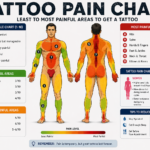
A tattoo pain chart is a visual or descriptive guide that ranks tattoo placement pain from low to extreme. It helps first-timers and experienced tattoo lovers understand what to expect before getting inked.
Generally, tattoo pain depends on:
- Skin thickness
- Fat distribution
- Nerve density
- Bone proximity
- Session length
- Individual pain tolerance
Areas with more muscle and fat usually hurt less, while bony and sensitive areas hurt more.
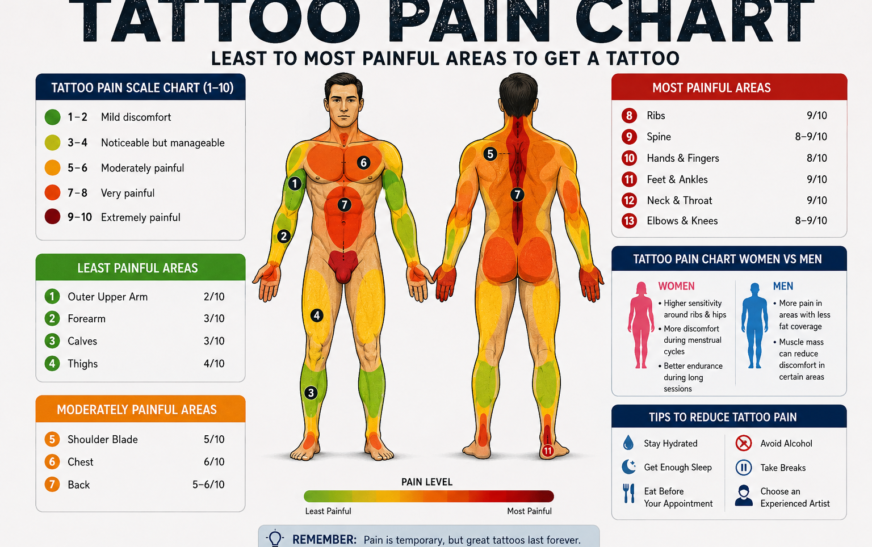
Tattoo Pain Scale Chart (1–10)
Here’s a general tattoo pain scale chart most tattoo artists agree on:
| Pain Level | Description |
|---|---|
| 1–2 | Mild discomfort |
| 3–4 | Noticeable but manageable |
| 5–6 | Moderately painful |
| 7–8 | Very painful |
| 9–10 | Extremely painful |
Complete Tattoo Pain Chart by Body Area
Least Painful Tattoo Areas
These spots are ideal for beginners because they contain more fat and muscle.
1. Outer Upper Arm
Pain Level: 2/10
This is one of the easiest tattoo locations. The skin is thick, and there are fewer nerve endings.
2. Forearm
Pain Level: 3/10
Forearm tattoos are popular because they are relatively low-pain and heal well.
3. Calves
Pain Level: 3/10
The calf muscle provides cushioning, reducing pain significantly.
4. Thighs
Pain Level: 4/10
Outer thighs are usually easy to tolerate, especially for longer sessions.
Moderately Painful Tattoo Areas
These spots involve more sensitivity but remain manageable for most people.
5. Shoulder Blade
Pain Level: 5/10
The closer the needle gets to bone, the sharper the pain becomes.
6. Chest
Pain Level: 6/10
Chest tattoos can be uncomfortable due to thin skin and vibration near the ribs.
7. Back
Pain Level: 5–6/10
Pain varies depending on the exact area and bone proximity.
Most Painful Tattoo Areas
These are considered the toughest spots because they have thin skin and many nerve endings.
8. Ribs
Pain Level: 9/10
Rib tattoos are infamous for intense pain and discomfort during breathing.
9. Spine
Pain Level: 8–9/10
The spinal area has little fat cushioning, making tattooing highly sensitive.
10. Hands and Fingers
Pain Level: 8/10
Thin skin and dense nerves make finger tattoos surprisingly painful.
11. Feet and Ankles
Pain Level: 9/10
Bone proximity and constant friction increase pain and healing difficulty.
12. Neck and Throat
Pain Level: 9/10
These areas contain many nerve endings and feel extremely sharp during tattooing.
13. Elbows and Knees
Pain Level: 8–9/10
Tattooing directly over joints and bone can feel intense and vibrating.
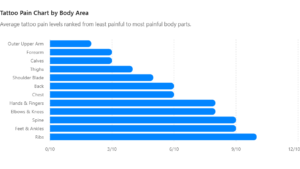
Tattoo Pain Levels by Body Area
Average tattoo pain levels ranked from least painful to most painful body parts.
0/103/106/109/1012/10Outer Upper ArmForearmCalvesThighsShoulder BladeBackChestHands & FingersElbows & KneesSpineFeet & AnklesRibs
Tattoo Pain Chart Female
Women often experience tattoo pain differently due to hormonal fluctuations, skin sensitivity, and fat distribution. However, studies and tattoo artist experiences suggest women sometimes tolerate prolonged pain better than men.
Common low-pain tattoo areas for women include:
- Outer thigh
- Shoulder
- Forearm
- Upper arm
More painful areas for women include:
- Rib cage
- Sternum
- Feet
- Spine
- Underboob area
The tattoo pain chart female may slightly differ because women generally have softer tissue and different nerve sensitivity patterns.
Tattoo Pain Chart Women vs Men
Tattoo Pain Chart Women
Women often report:
- Higher sensitivity around ribs and hips
- More discomfort during menstrual cycles
- Better endurance during long tattoo sessions
Tattoo Pain Chart Men
Men usually experience more pain in areas with less fat coverage, including:
- Inner arm
- Ankles
- Neck
- Spine
Muscle mass can sometimes reduce discomfort in certain areas.
Tattoo Pain Chart Men
For men, the most painful tattoo placements are commonly:
- Ribs
- Elbows
- Knees
- Neck
- Hands
- Feet
Less painful areas include:
- Biceps
- Shoulders
- Calves
- Outer thighs
A tattoo pain chart men guide can help determine the best placement for first tattoos.
Why Some Tattoo Areas Hurt More
Several biological factors influence tattoo pain:
Thin Skin
Areas with thin skin expose nerves more directly to the tattoo needle.
Nerve Endings
Places packed with nerves naturally feel sharper pain.
Bone Proximity
When tattoo needles vibrate over bone, pain intensifies.
Fat Cushioning
More body fat helps absorb needle impact.
Tips to Reduce Tattoo Pain
Stay Hydrated
Hydrated skin handles tattooing better.
Get Enough Sleep
Being well-rested improves pain tolerance.
Avoid Alcohol
Alcohol thins blood and increases sensitivity.
Eat Before Your Appointment
Low blood sugar can make pain feel worse.
Take Breaks
Short pauses help during long sessions.
Choose an Experienced Artist
Professional tattoo artists work efficiently and reduce unnecessary discomfort.
Does Tattoo Pain Get Worse Over Time?
Yes. Even easy tattoo placements can become painful during long sessions. Your body becomes more sensitive after several hours of repeated needle exposure.
This is why many artists split large tattoos into multiple appointments.
First Tattoo? Best Low-Pain Areas
If you’re nervous about pain, start with:
- Upper arm
- Forearm
- Shoulder
- Outer thigh
- Calf
These spots are ideal for beginners.
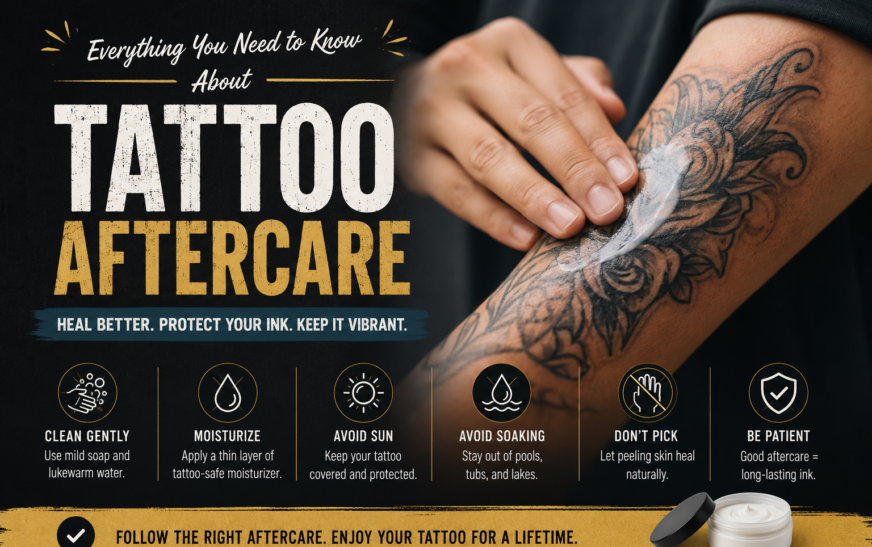
Tattoo Pain Aftercare
Pain doesn’t stop immediately after your session. Mild soreness, redness, and swelling are normal for several days.
You should:
- Keep the tattoo clean
- Moisturize regularly
- Avoid sun exposure
- Avoid tight clothing
- Never scratch healing skin
Final Thoughts
A tattoo pain chart is helpful for choosing the right tattoo placement and preparing mentally for your session. While everyone experiences pain differently, understanding the most and least painful tattoo spots can make the process less stressful.
Whether you’re researching the tattoo pain chart female, tattoo pain chart women, tattoo pain chart men, or a complete tattoo pain scale chart, the key is selecting a placement that matches your comfort level and tattoo goals.
For More Information visit our homepage: