What Is Dysphasia?
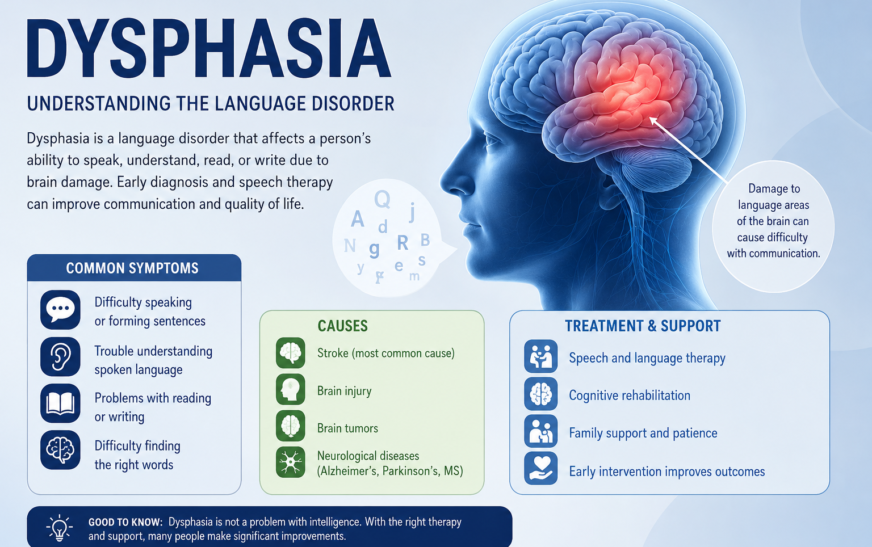
Dysphasia is a language disorder that affects a person’s ability to speak, understand language, read, or write. It commonly occurs after brain damage caused by stroke, head injury, tumors, or neurological diseases.
Many people ask, “what does dysphasia mean?” In simple terms, dysphasia refers to a partial impairment of language communication. A person may know what they want to say but struggle to form words or understand speech correctly.
In medical settings, healthcare professionals often use the term when language abilities are weakened but not completely lost.
What Is Dysphasia in Medical Terms?
In medical terms, dysphasia is defined as:
A neurological language disorder caused by damage to the language centers of the brain, especially in the left hemisphere.
The condition affects communication skills differently depending on the area of brain injury. Some patients struggle with speaking, while others may have difficulty understanding spoken language.
Dysphasia Definition
The official dysphasia definition is:
“An impairment of language comprehension or production resulting from brain dysfunction.”
This disorder may affect:
- Speaking clearly
- Finding the correct words
- Understanding conversations
- Reading text
- Writing sentences
A Patient With Dysphasia Has What Symptoms?
A common question is: “A patient with dysphasia has what symptoms?”
Symptoms vary based on severity and the affected brain region. Common signs include:
Difficulty Speaking
The person may:
- Speak slowly
- Use incomplete sentences
- Mispronounce words
- Struggle to find vocabulary
Problems Understanding Speech
Some individuals cannot fully understand conversations or instructions.
Reading and Writing Issues
Dysphasia may interfere with:
- Reading comprehension
- Spelling
- Writing coherent sentences
Word Substitution
Patients sometimes replace intended words with incorrect ones.
For example:
- Saying “chair” instead of “table”
- Using unrelated phrases
Communication Frustration
Because communication becomes difficult, patients often feel frustrated, anxious, or socially isolated.
Causes of Dysphasia
Several medical conditions can damage the brain’s language centers and lead to dysphasia.
Stroke
Stroke is the leading cause of dysphasia. When blood flow to language-processing areas is interrupted, communication abilities may decline rapidly.
Brain Injury
Traumatic head injuries from accidents or falls can impair speech and comprehension.
Brain Tumors
Tumors pressing against language regions may gradually cause communication difficulties.
Neurological Diseases
Conditions such as:
- Alzheimer’s disease
- Parkinson’s disease
- Multiple sclerosis
can contribute to progressive dysphasia.
Brain Infections
Serious infections affecting brain tissue may also damage language functions.
Types of Dysphasia
Different forms of dysphasia affect communication in unique ways.
Expressive Dysphasia
A person understands language but struggles to speak or form sentences.
Receptive Dysphasia
The individual can speak fluently but has trouble understanding spoken language.
Global Dysphasia
This severe type affects both speaking and understanding abilities.
Anomic Dysphasia
Patients mainly struggle to recall words or names.
Aphasia vs Dysphasia
Many people search for “aphasia vs dysphasia” because the terms are closely related.
Although they are sometimes used interchangeably, there is a subtle difference.
| Feature |
Dysphasia |
Aphasia |
| Severity |
Partial language impairment |
Complete or severe language loss |
| Communication Ability |
Reduced |
Greatly impaired |
| Common Usage |
Often used in Europe/UK |
Common in US medical practice |
| Brain Damage |
Moderate to severe |
Usually severe |
Dysphasia vs Aphasia Explained
The phrase “dysphasia vs aphasia” mainly refers to severity levels.
- Dysphasia = partial language difficulty
- Aphasia = total or near-total loss of language abilities
However, modern healthcare providers often prefer the term aphasia for both mild and severe cases to avoid confusion.
How Is Dysphasia Diagnosed?
Doctors diagnose dysphasia using neurological and language assessments.
Medical History Review
Healthcare providers evaluate:
- Stroke history
- Brain injury
- Neurological symptoms
Speech and Language Tests
Speech-language pathologists assess:
- Word recall
- Understanding
- Sentence formation
- Reading ability
Brain Imaging
Imaging tests may include:
These help identify areas of brain damage.
Treatment for Dysphasia
Treatment depends on the underlying cause and severity.
Speech Therapy
Speech-language therapy is the most effective treatment option. Therapists help patients improve:
- Vocabulary
- Pronunciation
- Sentence structure
- Comprehension
Cognitive Rehabilitation
Brain exercises can strengthen communication pathways.
Family Communication Support
Loved ones can help by:
- Speaking slowly
- Using short sentences
- Allowing extra response time
Treating Underlying Conditions
Managing strokes, tumors, or neurological diseases can improve outcomes.
Can Dysphasia Be Cured?
Recovery varies from person to person.
Some patients recover fully, especially after mild strokes or temporary brain injuries. Others may experience long-term communication challenges.
Early diagnosis and speech therapy significantly improve recovery chances.
Living With Dysphasia
Living with dysphasia can affect:
- Social interactions
- Employment
- Emotional health
Support groups, therapy, and communication tools can help patients maintain independence and confidence.
When to See a Doctor
Seek immediate medical attention if sudden speech problems appear, especially with:
- Facial drooping
- Weakness
- Confusion
- Vision problems
These may indicate a stroke.
FAQs
What does dysphasia mean?
Dysphasia means a partial impairment of language abilities caused by brain damage.
What is dysphasia in medical terms?
In medical terms, dysphasia is a neurological communication disorder affecting speech comprehension or production.
Is dysphasia the same as aphasia?
Not exactly. Dysphasia usually refers to partial impairment, while aphasia indicates severe or complete language loss.
A patient with dysphasia has what difficulties?
A patient with dysphasia has difficulty speaking, understanding language, reading, or writing.
Can dysphasia improve?
Yes. Many patients improve through speech therapy and rehabilitation.
Final Thoughts
Dysphasia is a serious but manageable communication disorder caused by brain damage. Understanding what is dysphasia, recognizing symptoms early, and beginning speech therapy promptly can greatly improve recovery outcomes.
Knowing the difference between aphasia vs dysphasia also helps patients and caregivers better understand diagnosis and treatment options.
For More Information Visit our Homepage: